Most companies pour enormous energy into hiring. They write the job posts, run the interviews, and celebrate when an offer gets accepted. Then they turn their attention away, and eighteen months later that same person walks out the door, and the whole expensive cycle starts over.
In a Dallas-Fort Worth market where hiring is already slow and competitive, that is a costly habit. As a recruiter, I want to make the case that keeping your people is often smarter, and cheaper, than replacing them.
What turnover actually costs
The price of losing an employee is much higher than most leaders assume, because so much of it is hidden.
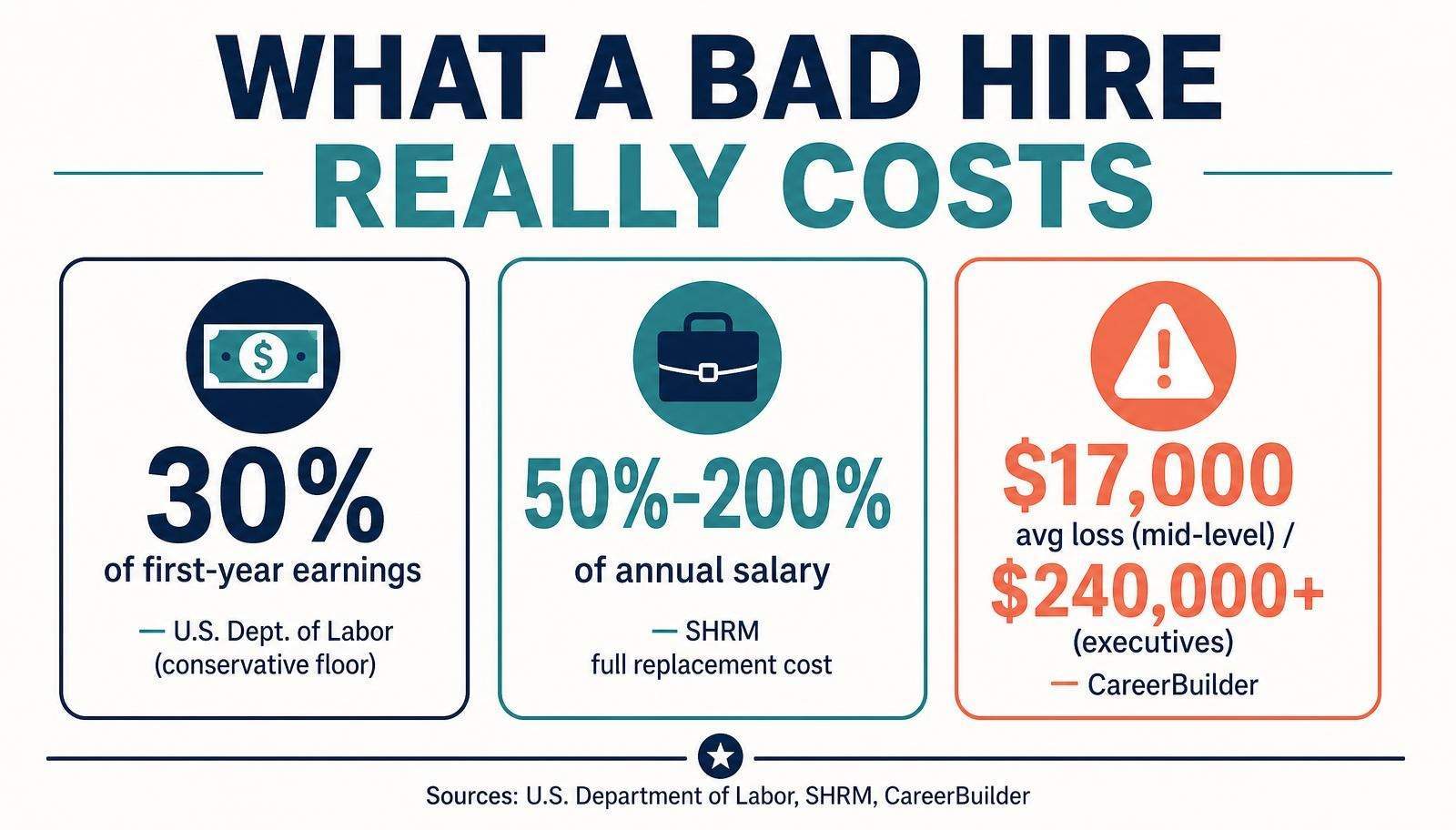
The most widely cited research, from Gallup, estimates that replacing an employee costs between one-half and two times that person’s annual salary. The range is wide because it depends on the role, and Gallup breaks it down roughly like this:
- Frontline workers: about 40 percent of their annual salary
- Technical and professional roles: about 80 percent of salary
- Leaders and managers: around 200 percent of salary
Source: Gallup. SHRM reports an average direct cost per hire of roughly $4,700, before lost productivity.
Scale that across an organization and the numbers get serious fast. Gallup estimates that voluntary turnover alone costs U.S. businesses about $1 trillion every year. And those figures often do not fully capture the soft costs: lost institutional knowledge, the drag on team morale, and the months it takes a replacement to reach full productivity.
Why it matters more right now
Retention always matters, but it matters more in a market like ours.
When hiring is fast and easy, losing someone stings less because you can replace them quickly. That is not today’s DFW reality. Job growth has slowed, and filling roles takes longer, a shift I wrote about in the piece on Dallas slowing job growth and recruiter strategies. In some specialized fields, the talent simply is not there to grab, which is exactly the problem behind why Texas companies struggle to hire engineers.
When a replacement is slow and expensive to find, every person you keep is worth more. Retention is not a soft, feel-good goal. In this market, it is a hard financial strategy.
Most turnover is preventable
Here is the part that should get every leader’s attention. A large share of the people who quit did not have to.
Research drawing on Gallup and Work Institute data suggests that a substantial portion of voluntary departures, often cited as roughly half or more, are preventable through things within the employer’s control. People rarely leave over one thing. They leave over an accumulation of neglect. And most of what drives them out is fixable.
What actually keeps people
The good news is that retention does not usually come down to dramatic gestures or bidding wars. It comes down to a handful of things done consistently.
- Pay fairly and transparently. If your compensation drifts below the market, your best people will notice, and they are the ones with options. Knowing the local market is step one, which is what a resource like a Dallas-Fort Worth salary guide is for.
- Give people a path. Employees stay where they can grow. Clear development and advancement, even in small steps, is one of the strongest retention tools there is.
- Invest in good managers. People leave managers, not just companies. A supported, well-trained manager is your best retention program.
- Recognize good work. Recognition is nearly free and enormously effective. People who feel seen are far more likely to stay.
- Onboard well. A rough first ninety days plants doubt early. A strong start pays off for years.
The shift worth making
The companies that will win the DFW talent race over the next few years are not necessarily the ones that hire the fastest. They are the ones that hold on to the good people they already have.
Every retained employee is a role you do not have to fill, a search you do not have to run, and a productivity gap you do not have to absorb. Given what turnover actually costs, and how hard replacement has become, treating retention as seriously as recruiting is simply good business.
Keep your best people. In this market, they are the hardest thing to replace.