When a new hire does not work out, most managers think about the salary they paid and call that the loss. As a recruiter, I can tell you that the salary is the smallest part of the bill. The true cost of a bad hire runs far deeper, and it is one of the most underestimated numbers in business.
Let me break down what a hiring mistake actually costs, using the real data, so you can see why getting it right the first time matters so much.
The Headline Numbers
The research here is remarkably consistent, and the figures are larger than most people expect.
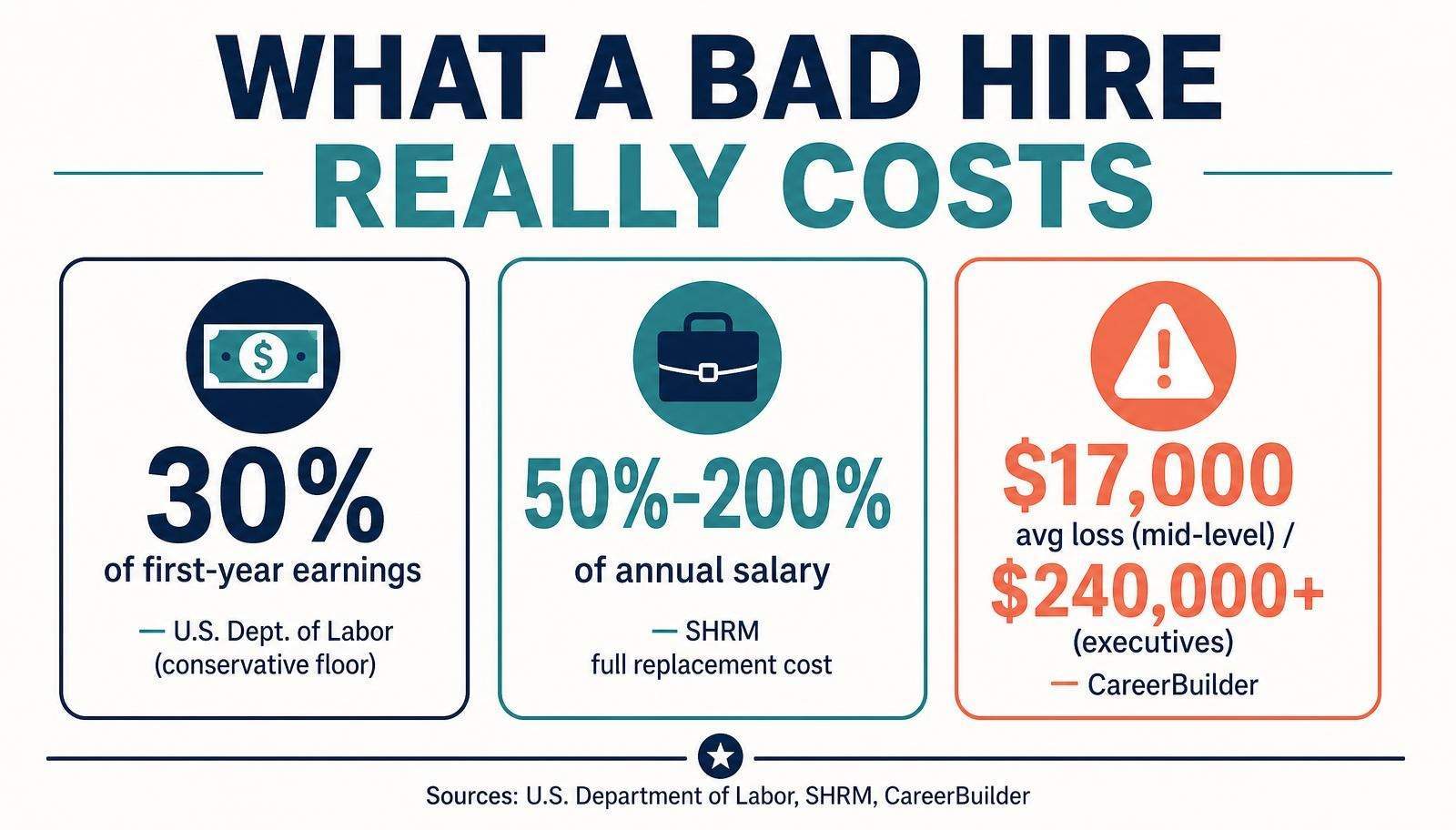
- The U.S. Department of Labor puts the cost of a bad hire at about 30 percent of the employee’s first-year earnings, and calls that a conservative floor.
- The Society for Human Resource Management estimates full replacement runs 50 to 200 percent of annual salary, with senior roles at the high end.
- CareerBuilder surveys put the average loss at roughly $17,000 for entry to mid-level roles, and $240,000 or more for executive mis-hires.
Sources: U.S. Department of Labor, SHRM, CareerBuilder.
For a single mid-level role, that 30 percent floor already means tens of thousands of dollars. And that is before you count the costs that never show up on an invoice.
Where the Money Actually Goes
The reason the total climbs so high is that a bad hire generates costs in five different places at once. Most companies only track the first one.
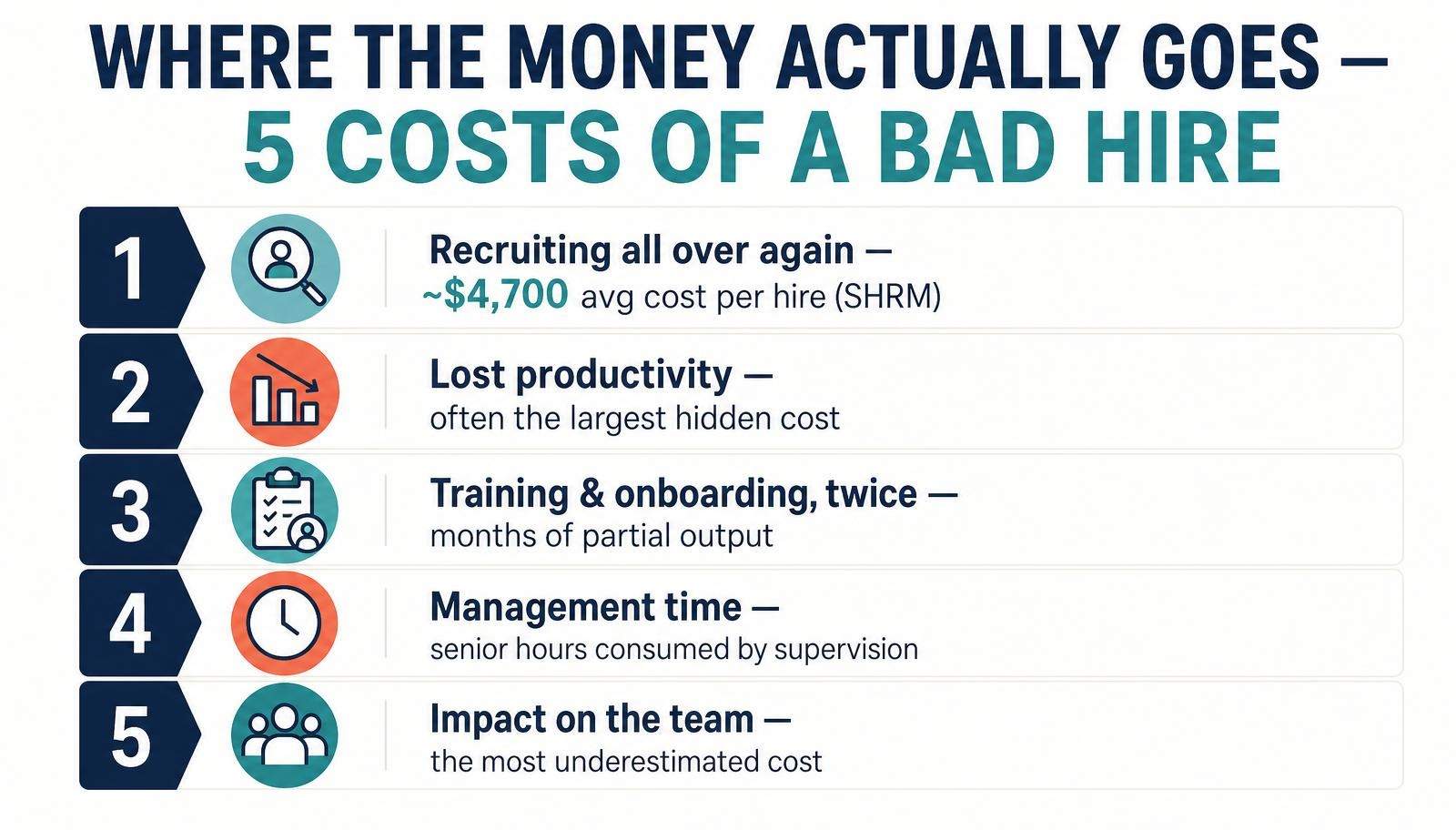
1. Recruiting it all over again. Every dollar you spent filling the role the first time, you now spend again. SHRM’s benchmarking puts the average cost per hire in the range of roughly $4,700, and that is just the direct, hard cost of sourcing, screening, and hiring a replacement.
2. Lost productivity. A poor performer does not produce at the level the role requires, and the gap is expensive. The work does not get done, or it gets done poorly and has to be redone. This is often the single largest hidden cost, and it runs the entire time the wrong person is in the seat.
3. Training and onboarding, twice. The time and money invested in bringing the bad hire up to speed is largely lost when they leave. Then you spend it again on their replacement. For many roles, onboarding to full productivity takes months, which is months of partial output paid at full salary.
4. Management time. Underperformers require far more supervision. It is common for a manager to spend a meaningful share of their week managing one struggling direct report, time pulled away from their own work and from developing the rest of the team. That is a senior salary partially consumed by one hiring mistake.
5. The impact on everyone else. This is the cost managers underestimate most, and it may be the most damaging. A bad hire does not fail in isolation. They affect the whole team.
The Ripple Effect on the Team
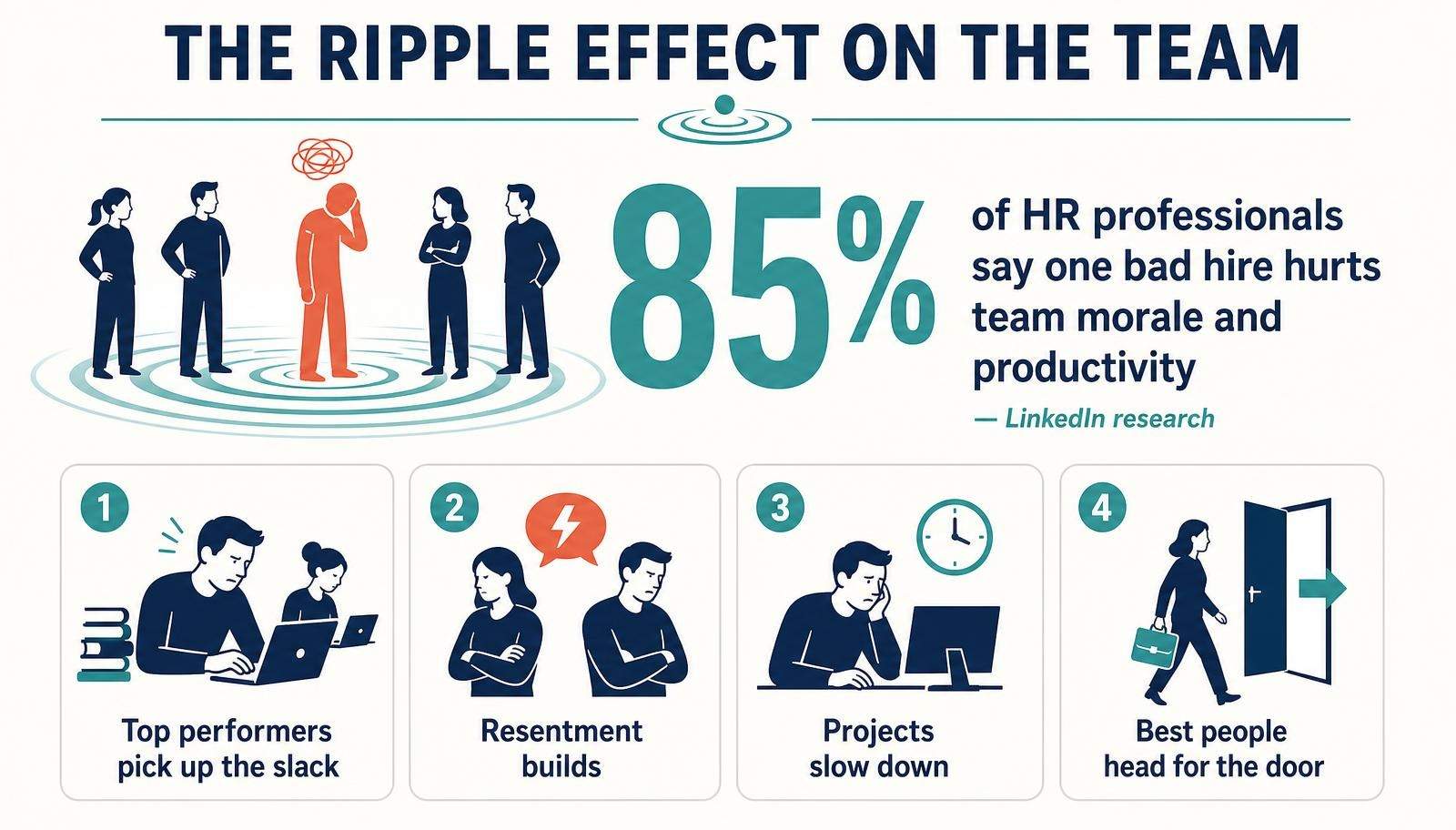
When one person is not carrying their weight, everyone around them feels it, and the data backs this up. According to LinkedIn research, 85 percent of HR professionals say a single bad hire negatively affects the morale and productivity of the surrounding team.
Think about what that looks like day to day:
- Your strong performers quietly pick up the slack, and they notice they are doing it.
- Resentment builds when a struggling colleague is not addressed.
- Projects slow down because one link in the chain is weak.
- Your best people start to wonder whether this is a place that tolerates poor performance.
That last point is the real danger. A bad hire left in place too long does not just cost you their output. It can push your best people toward the door, and losing a top performer is a far more expensive problem than the original bad hire ever was. This is exactly why I argue that retention and hiring quality are two sides of the same coin.
Why Bad Hires Happen
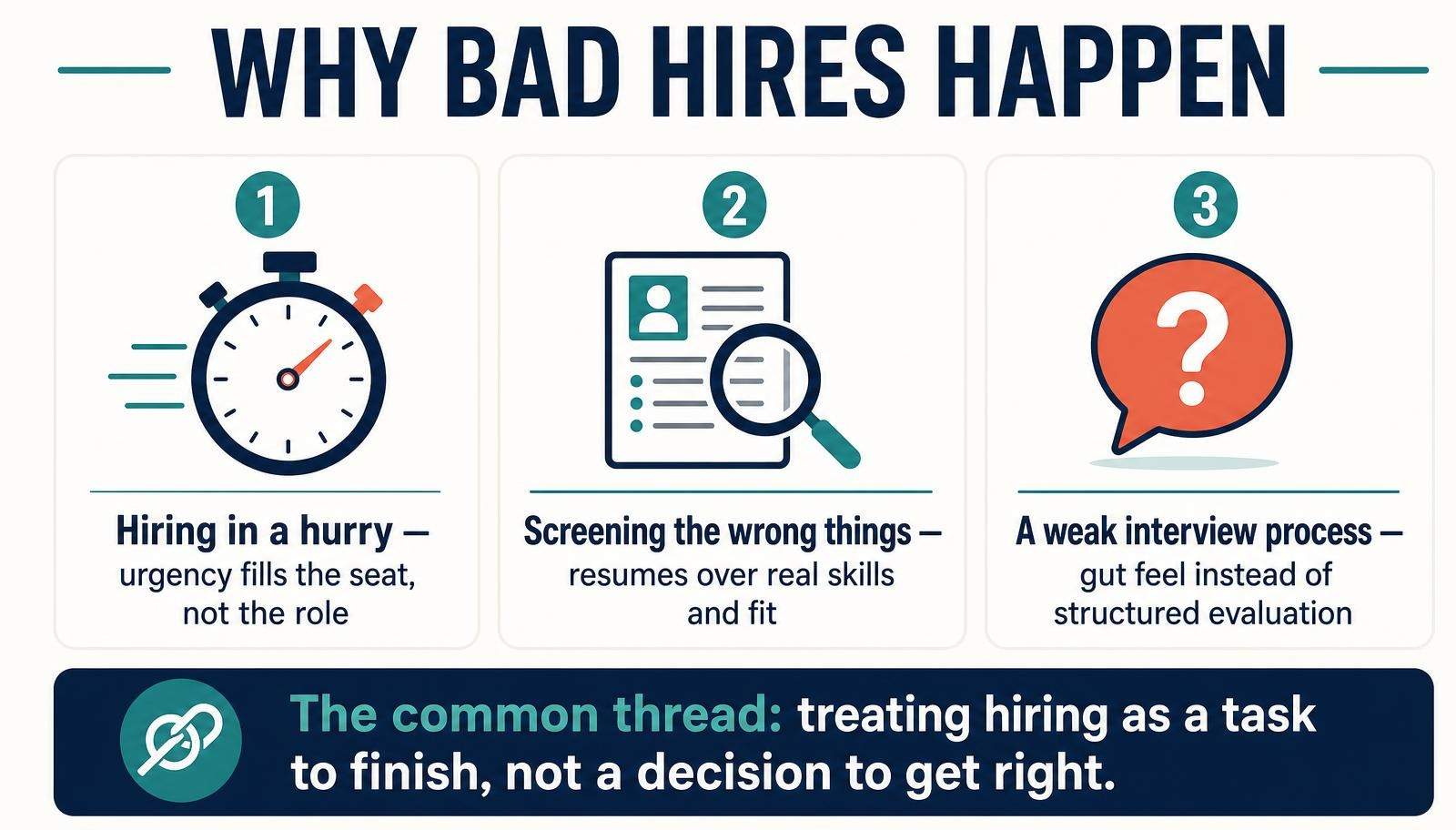
If the cost is this high, why do bad hires happen so often? In my experience, they usually trace back to a rushed or shallow process.
- Hiring in a hurry. An urgent opening pressures managers to fill the seat rather than fill it well.
- Screening for the wrong things. Overweighting a resume or a degree while underweighting the actual skills and fit the role requires.
- A weak interview process. Vague questions and gut-feel decisions instead of structured, evidence-based evaluation.
The common thread is treating hiring as a task to complete quickly rather than a decision to get right. Given the numbers above, the math almost always favors slowing down.
The Case for Doing It Right
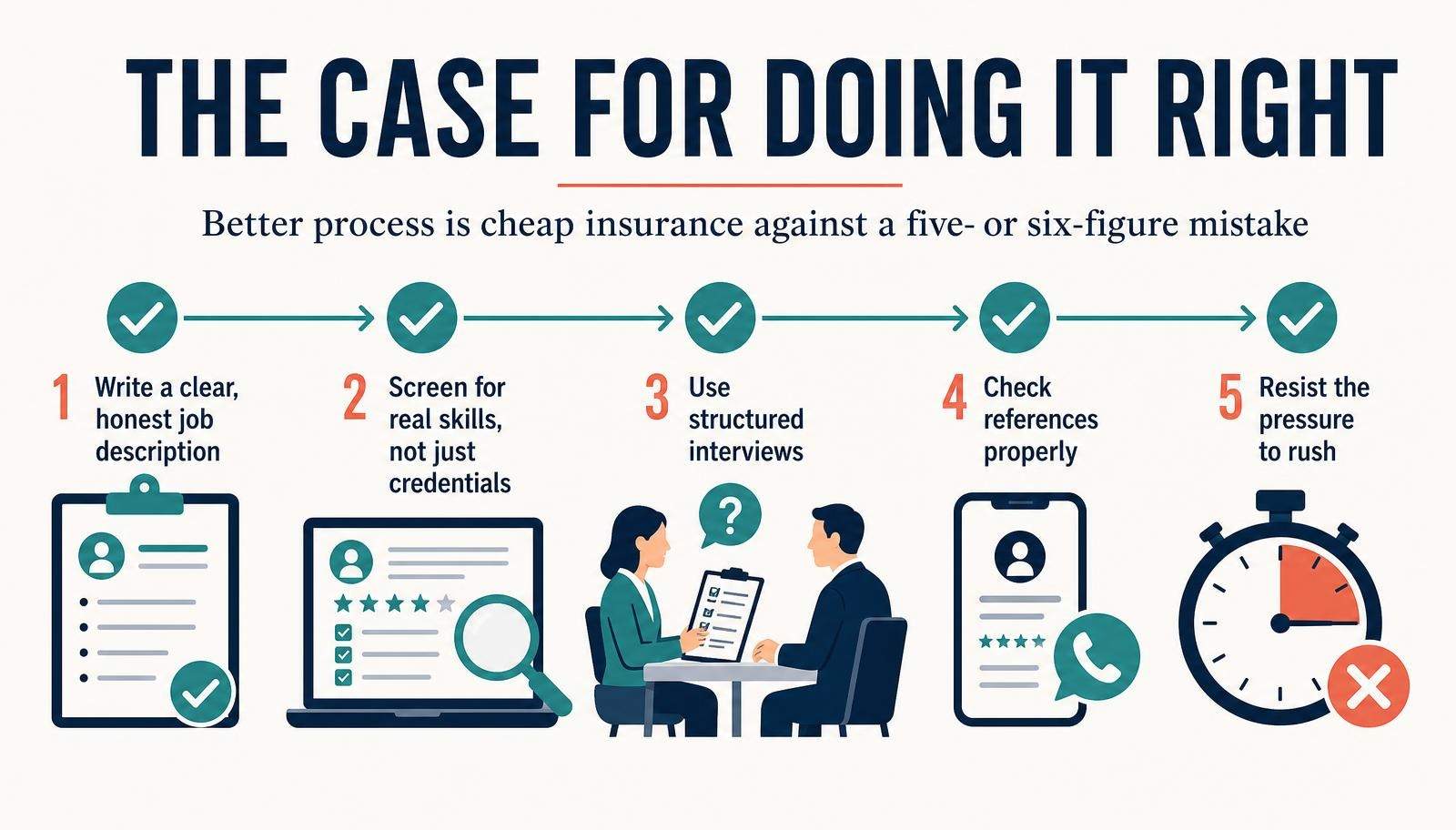
Here is the reframe that helps. Every hour and dollar you invest in a better hiring process is cheap insurance against a five-figure, and sometimes six-figure, mistake.
That means writing a clear, honest job description, screening for real skills rather than just credentials, using a structured interview process, checking references properly, and resisting the pressure to rush. None of it is glamorous. All of it is far cheaper than getting it wrong.
The Bottom Line
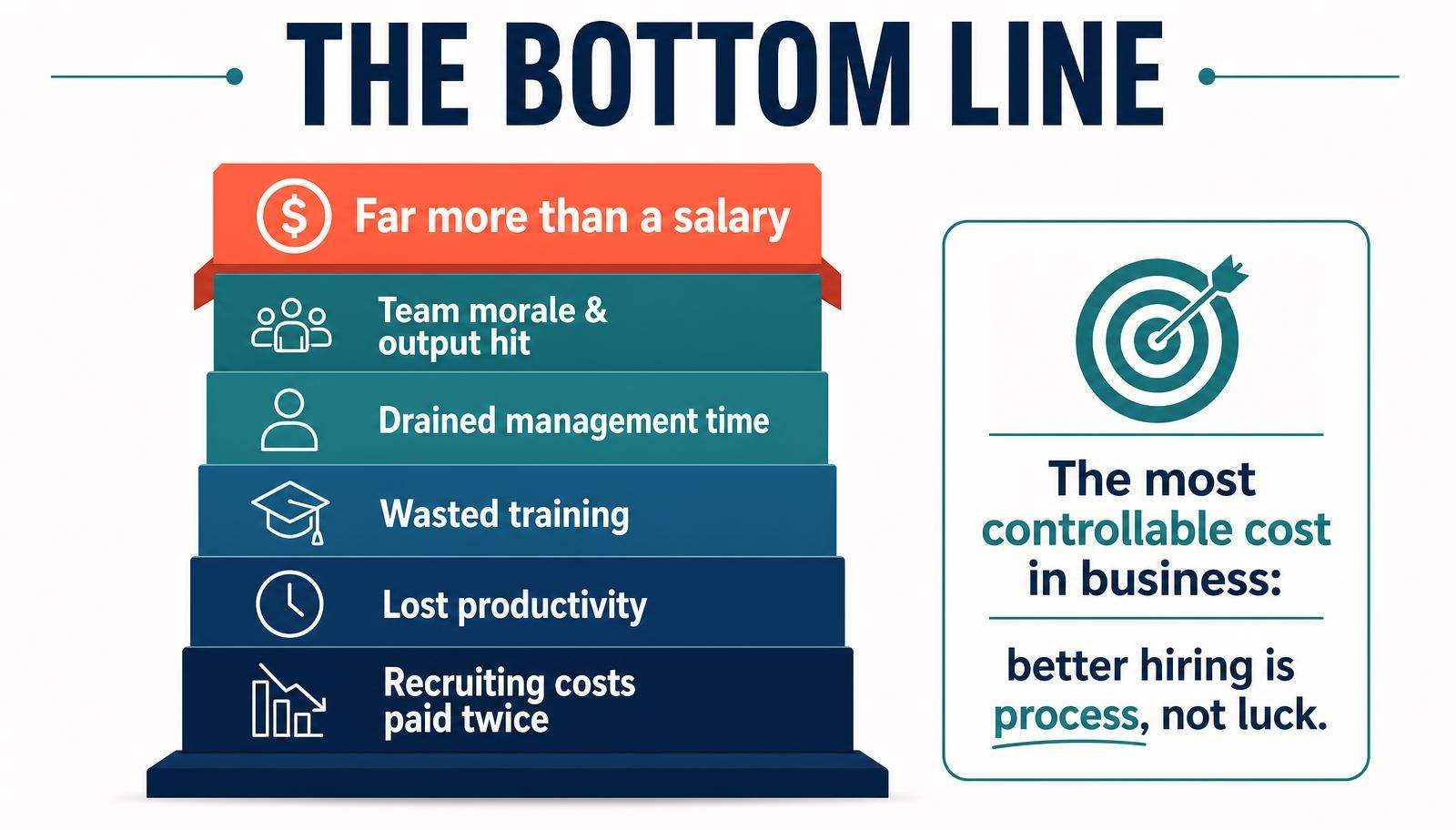
A bad hire is not a line item equal to a salary. It is recruiting costs paid twice, lost productivity, wasted training, drained management time, and a hit to the morale and output of your whole team. Stacked together, that is why the research lands so far north of what most people guess.
The good news is that this is one of the most controllable costs in business. Better hiring is not about luck. It is about process. And when the downside of getting it wrong is this steep, investing in getting it right is one of the smartest financial decisions a company can make.
Kallie Boxell is a Recruitment Director based in Dallas, TX. She writes about hiring, retention, and the Dallas-Fort Worth job market, helping companies and candidates navigate both sides of the search.