I read a lot of job descriptions. That comes with the territory when you place candidates for a living. And I will be honest with you: most of them are not doing the work their authors think they are.
I see the same patterns over and over. Vague language about being a “dynamic self-starter.” A bullet list of 22 required skills, half of which the hiring manager cannot define. A salary field that says “competitive compensation” and nothing else. A closing line that says “join our family” without a single word about what the role actually involves on a Tuesday afternoon.
These posts do not attract the best candidates. They filter them out. The people who apply anyway are often the least discerning. The people you actually want, the ones with options, scroll right past and keep going.
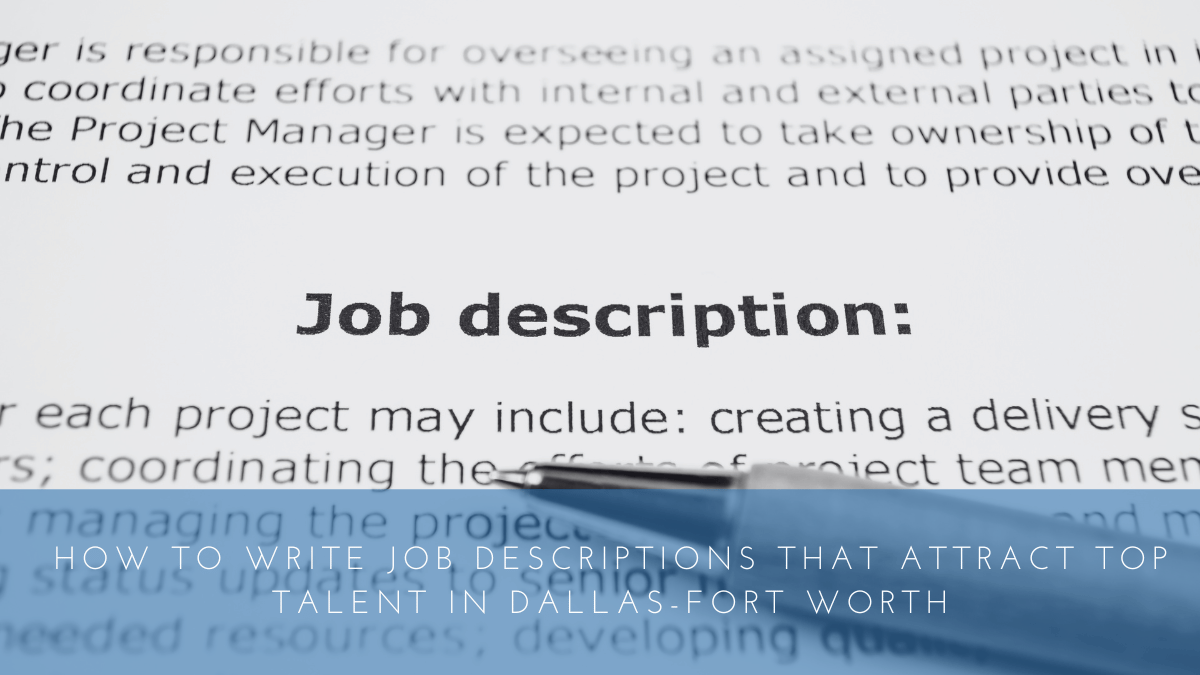
I have been recruiting in Dallas-Fort Worth for years, and in a market as competitive as this one, a weak job post is not just a minor inefficiency. It is a direct competitive disadvantage. Here is what I tell my clients when we sit down to build a posting that will actually work.
The Salary Question Is Already Settled
I know hiring managers who still resist putting a salary range in a job post. The arguments are always the same. They do not want to anchor high. They want flexibility. They worry about their current employees seeing the number.
The data does not support any of those concerns. According to a 2026 Resume Genius report, 72% of job seekers are less likely to apply when a posting does not list a salary. Another 79% say missing pay information makes them question whether the employer is being transparent at all. And a SHRM survey found that 70% of companies that included a salary range in their job posts saw more applicants as a result.
Think about what that means in DFW right now. You are competing with hundreds of other open roles. A strong candidate with two years of experience in your field has options. The moment they hit your posting and see no salary information, you have made them do extra work before they have even read your description. Many of them will not bother. If you want to know what the market is paying right now, my 2026 Dallas-Fort Worth Salary Guide is a good starting point. Use real numbers. Use a range. Post it up front.
The Opening Section Has One Job
The first paragraph of a job description is the most important one. Not the list of requirements. Not the benefits section. The opening.
Most companies use the opening to describe themselves. They write three sentences about being an industry leader, a fast-growing team, or a values-driven organization. The candidate does not care yet. They need to know, within the first 30 seconds, whether this role is relevant to their life.
Start with the work. What will this person actually do? What problem are they solving? Who will they work with? A strong opening paragraph answers those three questions directly. It does not use the word “passionate.” It does not promise a “collaborative environment.” It describes reality in plain terms and trusts the reader to decide if that reality sounds good.
Requirements: Less Is More
I consistently see companies list more requirements than the role genuinely demands. Sometimes it is because the post was copied from a previous hire who happened to have an unusual background. Sometimes it is because multiple team members added their wish list without anyone editing it down. Sometimes the hiring manager just does not know what the role actually requires on a daily basis.
Here is what I recommend. Split requirements into two clear groups: what is truly non-negotiable, and what someone could learn on the job or develop over time. Post the first group as requirements. Post the second as preferred or a plus. Then look at your non-negotiable list and ask honestly whether every single item on it is a genuine blocker. Five years of experience in a tool that has existed for three? A specific degree for a role that measures output, not credentials? Those items cost you qualified applicants without protecting you from anything.
Research consistently shows that candidates, particularly women, are less likely to apply when they do not meet every listed requirement. If your list is inflated, you are narrowing your pool in ways you probably do not intend.
Describe the Work, Not the Ideal Person
This is the section where most job descriptions fall apart. Instead of describing what the role involves, companies describe a hypothetical perfect candidate. “You are a results-driven communicator who thrives in ambiguity.” That sentence tells an applicant nothing about the actual job.
Try describing a typical week instead. What projects is this person responsible for? Who do they report to and how often? What does a successful first 90 days look like? What tools do they use? What decisions do they make independently, and what gets escalated?
This level of specificity serves everyone. Qualified candidates immediately recognize whether the role matches their experience and interests. Underqualified candidates self-select out. And the people who do apply come in with accurate expectations, which reduces early turnover significantly. I cover what happens after a good candidate walks through the door in my post on the art of the interview — but getting the right people to the door starts here.
Include the Interview Process
This one costs nothing and almost nobody does it. At the end of your job description, tell candidates exactly what to expect after they apply. How many rounds are there? Who will they meet? Is there a skills assessment? What is the typical timeline from application to offer?
Candidates in the current DFW market are interviewing at multiple companies simultaneously. The ones who know your process will manage their schedule around it. The ones who do not will drop out when they get a faster offer somewhere else. Transparency here is a competitive advantage, not a liability. Given the current hiring climate in Dallas, companies that move clearly and communicate well are closing candidates that slower, less transparent competitors keep losing.
What a Strong Job Post Actually Looks Like
Job Description Checklist
- Salary range posted clearly, not buried in the benefits section
- Opening paragraph describes the actual work, not the company’s awards
- Requirements split into must-have and nice-to-have
- Day-to-day responsibilities described with specific examples
- Team structure and reporting line included
- Tools, systems, or tech stack named where relevant
- What success looks like in 30, 60, and 90 days
- Work arrangement stated clearly (remote, hybrid, on-site)
- Interview process and timeline explained
- Growth and development opportunities mentioned honestly
Companies that invest in learning and development see better retention, and candidates know it. If your organization genuinely supports employee growth and development, say so specifically. Name the programs, the budget, or the culture around learning. That kind of detail matters to the strongest candidates, and it differentiates you from competitors who list “professional development” as a checkbox with nothing behind it.
What DFW Companies Get Wrong Specifically
In the Dallas-Fort Worth market, I see a few patterns that are specific to how companies here tend to post roles. The market has grown fast enough that many companies have not updated their hiring infrastructure to match where the talent market actually is. They are using 2019 job post templates in a 2026 hiring environment.
The DFW metro is pulling candidates from across the country now. Remote-friendly roles especially attract people who are comparing your posting against opportunities in cities they have never visited. Your job post may be someone’s first impression of your company, your culture, and your leadership. Write it accordingly.
Second, the tech and engineering sectors here are particularly competitive. Texas job growth has brought more companies into the market, which means more competition for the same pool of skilled candidates. Generic posts do not stand out. Specific, honest, well-written posts do.
Frequently Asked Questions
How long should a job description be?
Long enough to answer the questions a serious candidate would ask, and not a word longer. In practice, that usually means 400 to 700 words for most roles. Shorter posts often leave out critical details. Longer ones tend to include requirements that were added without much thought. If you are writing more than 800 words, review for redundancy.
Should I include a salary range if Texas does not require it?
Yes. Texas does not currently have a statewide pay transparency law, but the data is clear that posting a range increases both application volume and candidate quality. You are not required to do it. You just get better results when you do.
What is the biggest mistake companies make in job posts?
Writing for an imaginary perfect candidate instead of describing a real role. Posts filled with personality adjectives and inflated requirements tell candidates almost nothing useful. Posts that describe actual daily work, realistic expectations, and honest culture attract people who are genuinely suited to the job.
How often should I update job descriptions?
Every time you open the role. Roles evolve, teams change, and compensation benchmarks shift. A job post from 18 months ago may accurately describe something that no longer exists. Pull it, update it against current market data, and repost. Candidates notice when a description feels stale, and it reflects on your organization.
Does remote or hybrid status really affect how many people apply?
Significantly. Recruiters offering flexible or hybrid arrangements are nearly 50% more confident they will find the right candidates compared to those recruiting for fully on-site roles, according to Monster research. If your role has flexibility, lead with it. Do not hide it in the benefits section.
If you are working through a search right now and want to talk through your posting strategy, reach out directly. A better job description is one of the fastest, cheapest changes a company can make to improve the quality of their applicant pool. Most of the time, the fix takes less than an hour.